
Loading...
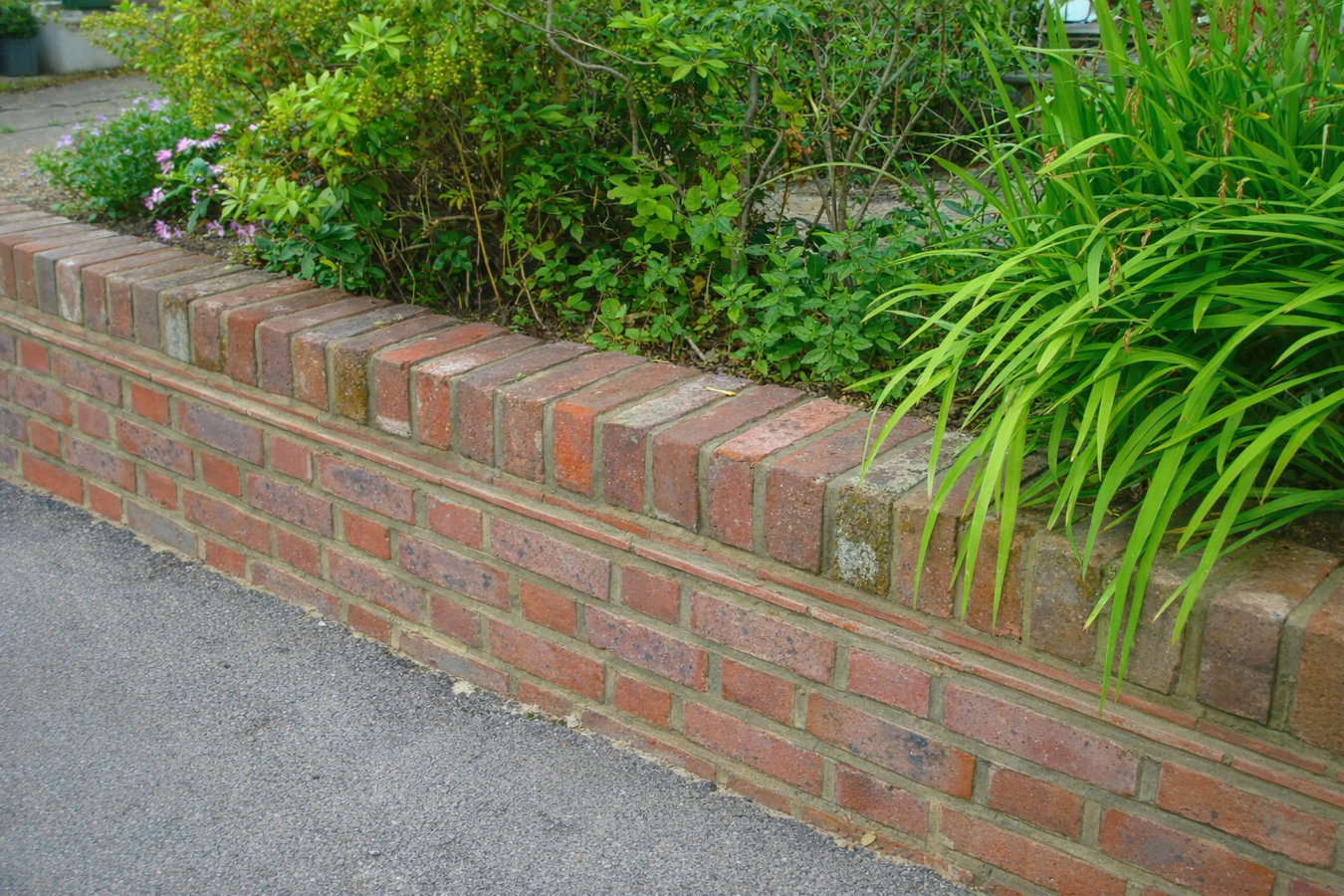
Temple's Blackland Prairie clay is hard on any wall with a shallow footing. We dig to the right depth, pour concrete footings sized for local soil conditions, and lay brick course by course - every joint checked for level.
Brick wall installation in Temple, TX means laying individual bricks course by course in mortar on a concrete footing - not a decorative panel or veneer over another structure. A straightforward garden or short retaining wall typically takes one to three days; a longer boundary wall or a project requiring a permit inspection can take a week or more.
The foundation underneath is what determines whether that wall is still standing in 50 years or cracking at the five-year mark. Bell County sits on Blackland Prairie clay that swells when it rains and shrinks during dry spells - and in a year with both drought and heavy rain, that movement can be dramatic. A concrete footing that is not sized for local soil depth and movement will let the wall shift with the ground, which is when cracks appear. Homeowners who need both a wall and work on the face of their home often combine brick wall installation with brick repair or stone masonry in a single project scope.
Mortar joint quality is the other detail that separates a wall that sheds water correctly from one that traps it. Tooled joints - shaped and pressed while the mortar is still soft - keep water out over time. Flat or recessed joints that are not properly finished collect moisture, which accelerates wear in Central Texas where heavy rain and intense heat alternate throughout the year.
Hairline cracks in mortar joints are common in older walls and often just a maintenance issue. But cracks that run diagonally through the bricks themselves, or that are wide enough to slip a coin into, are a sign the wall has moved. In Temple, this kind of movement is usually caused by clay soil expanding and contracting under the footing. Left alone, water gets into those cracks and makes them worse.
Stand at one end of your wall and look straight down its length. A well-built wall should look perfectly straight. If it bows outward, leans to one side, or has a section pushing out, the wall has structural movement that will not fix itself. This is a safety concern, not just a cosmetic one, and it warrants a professional assessment before it gets worse.
If you can pick mortar out of the joints with your fingernail, or if you are finding small chunks of gray material on the ground near your wall, the mortar has reached the end of its useful life. This is especially common in walls that are 20 or more years old and have been through many of Temple's wet-dry cycles. Caught early, a tuckpointing job is straightforward. If water has been getting in for years, the damage may run deeper.
Sometimes the sign you need a brick wall is not a problem - it is an opportunity. If you have a yard that feels exposed, a garden bed that keeps getting disturbed, or a driveway entrance that lacks definition, a brick wall solves all of those things at once. In Temple's newer subdivisions, a well-placed wall adds privacy and curb appeal that other materials do not match.
We install brick walls of all types - garden borders, privacy walls, and structural retaining walls - each on a concrete footing poured at the depth that Bell County soil requires. We also handle brick repair on existing walls where the structure is sound but the mortar or individual bricks need attention. For homeowners whose walls are failing because the footing has shifted, we assess whether targeted repair or a full rebuild is the better long-term investment.
We also do stone masonry for homeowners who want a natural stone aesthetic for a wall or border feature. The foundation work and process is similar, but the material selection and joint finishing differ - your contractor can walk you through both options before you commit to a material.
For homeowners who want a low, defined edge around a garden bed, driveway entrance, or front yard - installed with a concrete footing that stays stable through Bell County's clay soil movement.
For properties where a taller wall is needed to block sight lines from a neighboring lot or street - built with the footing depth and drainage provisions Temple soil requires.
For yards with a slope that needs to be held in place - brick retaining walls built with weep holes and proper drainage to handle Temple's heavy downpours without failing.
For walls that are structurally sound but have crumbling mortar joints - assessed to confirm the footing is still stable before repointing begins.
The Blackland Prairie clay that runs under most of Bell County is one of the more challenging soils for masonry work in the state. It absorbs water and expands noticeably during wet weather, then contracts sharply during a dry summer - and Central Texas has both conditions in the same year, regularly. A concrete footing that would hold a wall stable in Houston or Dallas may not be deep enough to stay put through Bell County's seasonal swing. Masons who have worked here for years understand this from experience. Contractors who travel in from outside the area sometimes do not factor it in until they are looking at their own cracked work a few years later.
Temple also has a wide range of neighborhoods - from older streets near downtown with character homes dating to the mid-1900s to newer subdivisions on the south and west sides with HOA covenants that govern wall design. Homeowners in Harker Heights and Killeen face the same soil and often the same HOA questions. Before finalizing any wall design in a newer subdivision, it is worth checking HOA documents - or asking your mason to help you confirm compliance before work begins, since building a wall that violates HOA rules can require a costly removal.
We visit the site, look at the ground where the footing will go, check for slopes or drainage issues, and talk through brick style and color options with you. You receive a written estimate that breaks out labor and materials separately. We respond within 1 business day of your call.
If a City of Temple permit is required, we submit the application - simple residential permits typically take one to two weeks. Once the permit is in hand, we confirm a start date. In summer months, we often schedule early-morning starts to avoid peak heat during mortar work.
Before a single brick goes down, the crew digs a trench and pours a concrete footing sized for local soil conditions. This is the most important part of the whole job. The footing needs 24 to 48 hours to cure before bricklaying begins - do not be surprised if the first day ends with nothing visible above ground.
The mason lays brick course by course, checking level and alignment at every row. When the last brick is set, we handle any required city inspection and walk you through the finished wall - including care instructions for the first months while the mortar reaches full strength.
Free site visit. No obligation. Written quote that breaks down labor and materials separately.
(254) 791-8302Blackland Prairie clay moves significantly through Bell County's wet and dry seasons - and a wall with an undersized footing will crack within a few years. We size the footing specifically for local soil conditions, not a generic depth that works on stable ground. That preparation is what makes the difference between a 50-year wall and one that needs repairs after the first drought.
Temple requires permits for walls above certain heights, and the process involves submitting plans, waiting for approval, and scheduling a city inspection after completion. We handle every step - you approve the design and let us take care of the rest. The permit documentation also protects you at resale. City of Temple Development Services
A well-built brick wall looks straight when you sight down its length and has even mortar joints at the same thickness all the way across. We check level and alignment at every course, not just at the end. That attention during construction is what produces a wall that looks right in year one and year twenty.
We have installed brick walls throughout Temple and the surrounding Bell County area - garden walls, privacy walls, and structural borders. We can connect you with local homeowners who can show you completed work in person, which tells you more than any website photo.
Footing depth, joint finishing, and local permit knowledge are not details you can see in a photo - they are what you find out about when work holds up through ten years of Bell County wet-dry cycles, or when it does not. Those are the things we get right before the first brick goes down.
The Brick Industry Association publishes installation standards and homeowner guidance for brick masonry work - a useful reference when evaluating any contractor's process or materials.
Explore natural stone construction as an alternative or complement to brick for walls, columns, and decorative features.
Learn MoreAddress damaged or deteriorating brick on the face of your home while your new wall project is underway.
Learn MoreSummer books fast - lock in your start date before the season fills up.