
Loading...
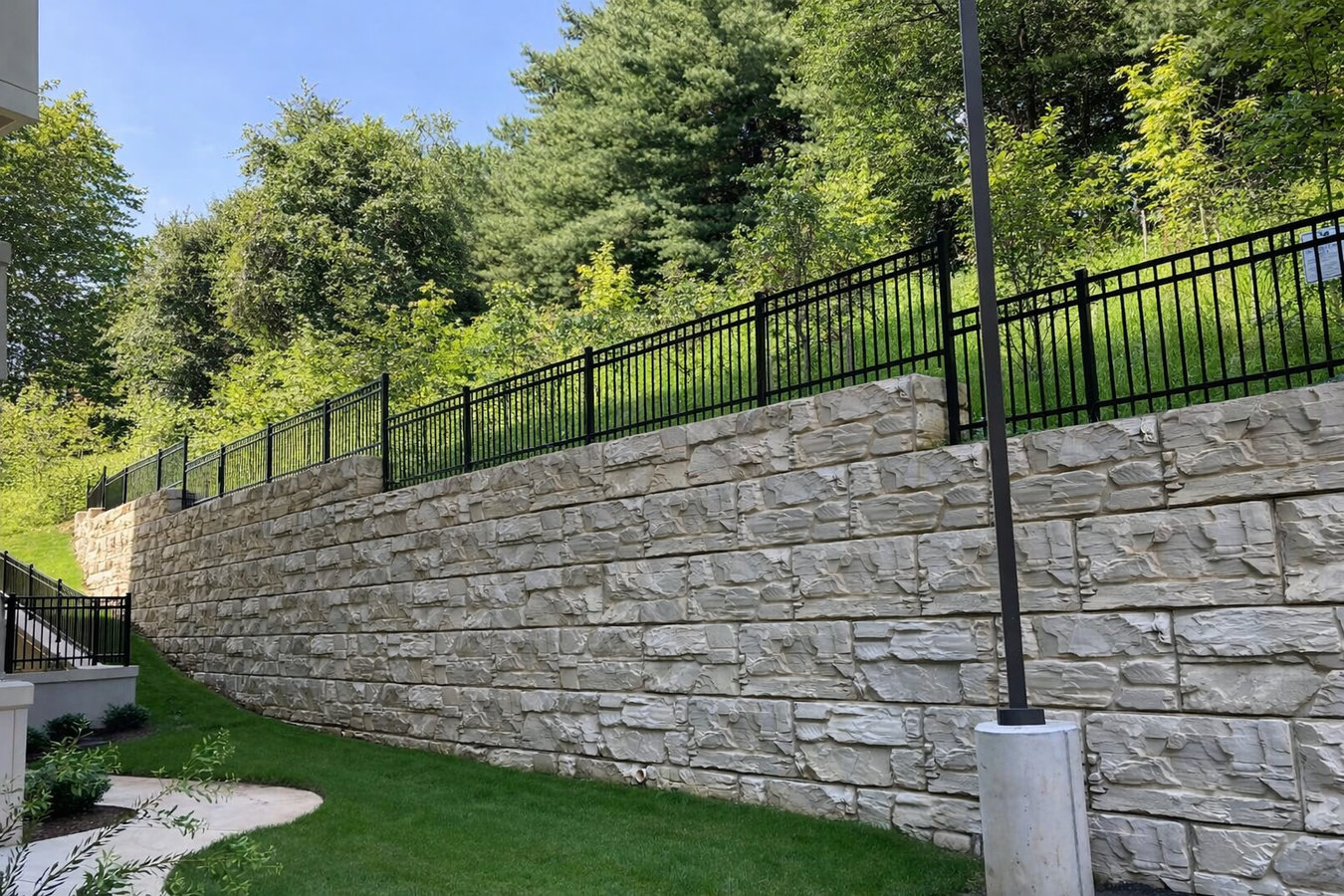
Soil washing away after every rain, an old timber wall failing, or water pushing toward your foundation - we build masonry retaining walls with drainage built in that hold up through Temple's clay-heavy ground.
Retaining wall construction in Temple, TX holds back soil on a slope or grade change so it does not erode, slide, or wash into your yard and foundation. Most straightforward residential walls - 20 to 40 feet long and under four feet tall - take one to three days to build once the crew is on site, with an additional one to three weeks for permit processing if your wall exceeds the height threshold.
Temple sits on the Blackland Prairie, a belt of heavy clay soil that swells with rain and contracts in dry weather. That seasonal movement is the main reason retaining walls here need to be built differently than walls in areas with stable soil. Water pressure behind the wall is the most common cause of retaining wall failure - a properly built wall includes gravel backfill and drainage so water has somewhere to go instead of pushing outward. If you are also dealing with water moving toward your home from the yard, our masonry restoration team can assess whether any existing structure nearby has been affected.
Not every retaining wall is an emergency repair. Many homeowners in Temple build them to carve out a flat patio, garden bed, or usable yard area on a sloped lot. If you have been looking at a hillside in your backyard and wishing it were usable space, a retaining wall is how you make that happen.
If you notice bare patches of dirt, small gullies, or a buildup of mud at the bottom of a slope after a heavy rain, your yard is actively eroding. Temple's intense summer thunderstorms can move a surprising amount of soil in a single event. A retaining wall stops that process and keeps your landscaping where it belongs.
Timber retaining walls have a limited lifespan, and many installed in Temple's older neighborhoods are now 20 to 30 years old. If yours is visibly leaning forward, has rotted boards, or has gaps where the timbers used to sit flush, it is no longer doing its job. Replacing it before it fails prevents the soil behind it from sliding.
When soil moves - which it does constantly in Temple's clay-heavy ground - it can push against or pull away from hard surfaces nearby. If you see cracks forming in concrete near a slope, or if a paved area has started to tilt or sink, the soil underneath is shifting and a retaining wall may be needed to stabilize it.
If rainwater runs toward your house rather than away from it, the grading of your yard may be working against you. A retaining wall combined with regrading can redirect water away from the foundation, which protects one of the most expensive parts of your home to repair. Temple's clay soil does not absorb water quickly - pooling near the foundation is a serious warning.
We build retaining walls from concrete block, natural stone, and other masonry materials. Concrete block is the most cost-effective option and holds up well in Central Texas conditions. Natural stone costs more but offers a more distinctive appearance and has among the longest lifespans of any retaining wall material. We also replace failing timber walls - replacing rotted or leaning landscape timbers with a masonry wall that will not need to be redone in another 15 to 20 years.
Drainage is designed into every wall we build, not added as an option. Once the soil is stabilized, we can also help you close out related work - our concrete block walls service handles boundary walls, privacy walls, and structural block work that often complements a retaining wall project. We assess the full scope of what your yard needs and explain the approach before any work begins.
The most cost-effective masonry option - best for homeowners who need a functional, durable wall on a clear budget.
For homeowners who want a distinctive look alongside lasting performance - natural stone walls are among the longest-lasting options available.
For yards with aging landscape timber walls that are past their useful life and starting to lean, rot, or pull apart.
Central Texas thunderstorms can drop several inches of rain in a matter of hours, and Temple's clay soil does not absorb water quickly. That combination means slopes in yards around Temple can lose significant topsoil in a single storm event. The Blackland Prairie soil in Bell County also goes through extreme wet-dry cycles - bone dry in August, saturated after a September storm. That rapid shift puts enormous pressure on retaining walls, which is why drainage behind the wall is not a detail that can be skipped here. Walls built without proper drainage in this region start leaning within a few years regardless of how well the materials are laid. Mason Contractors Association of America publishes standards for retaining wall drainage that reputable contractors follow.
Many of Temple's established neighborhoods - particularly those built in the 1970s through 1990s in areas like Harker Heights and Nolanville - have landscape timber walls that are now at or past the end of their useful life. If your yard has a timber wall that is starting to lean or pull apart, replacing it before it fails completely is almost always less expensive than dealing with the soil movement and erosion that follow a wall collapse. Fall and winter are the best windows to schedule this work in Temple, when demand slows and crews are more available.
When you reach out, we schedule a free on-site visit to look at your slope, soil conditions, and what you are trying to accomplish. This visit typically takes 30 to 60 minutes and costs you nothing. We will not quote you a price over the phone alone.
After the site visit, you receive a written estimate that breaks down labor, materials, drainage, and any permit costs. This is the time to ask about material options and to confirm that drainage is included in the scope. We respond within 1 business day of the site visit.
If your wall will be over four feet tall, we submit the permit application to the City of Temple before any digging begins. On the first work day, we mark the wall location, call 811 to confirm utilities are clear, and excavate to a depth that reaches stable, undisturbed soil - critical in Temple's reactive clay.
We build the wall in layers, placing gravel behind each course as we go so water can drain away rather than build pressure. After construction, the crew grades the surrounding soil and cleans the site. If a permit was required, a city inspector visits to approve the finished work.
Free on-site visit - we look at your slope, explain what we recommend, and give you a written quote. No obligation.
(254) 791-8302The number one reason retaining walls fail in Temple is water pressure building up behind them - not material quality or age. Every wall we build includes gravel backfill and proper drainage so water has somewhere to go after a heavy rain. We explain what is going behind the wall before we cover it up, because that is the part that matters most.
Texas 811 - utility marking before any diggingTemple's Blackland Prairie clay puts stress on any structure in the ground. We dig the base trench to reach undisturbed soil beneath the reactive clay layer - deeper than a national standard might call for. That base depth is what keeps your wall stable through the wet and dry cycles Central Texas throws at it every year.
Walls over four feet in Temple require a permit and an engineer's drawing before work begins. We manage the permit application as part of the job - you do not need to visit the permit office. A permitted wall has a city inspection on record, which protects you when the project is done and years later when you sell your home.
We have built walls across Temple and surrounding Bell County communities and can connect you with local homeowners willing to talk about their experience. Local references matter more than online reviews because they worked in the same soil and weather conditions you have - they can tell you exactly what to expect.
Any experienced retaining wall contractor should provide a written estimate before work begins - we do, along with a City of Temple permit on file where required. That documentation protects you during construction and is part of your home's record going forward.
Restore aging or weathered masonry surfaces on walls, foundations, and structures throughout your property.
Learn MoreBuild concrete block boundary or privacy walls that complement a retaining wall project using the same materials.
Learn MoreFall is the best time to schedule in Central Texas - crews are available and your wall will be in place before the heaviest storms arrive.