
Loading...
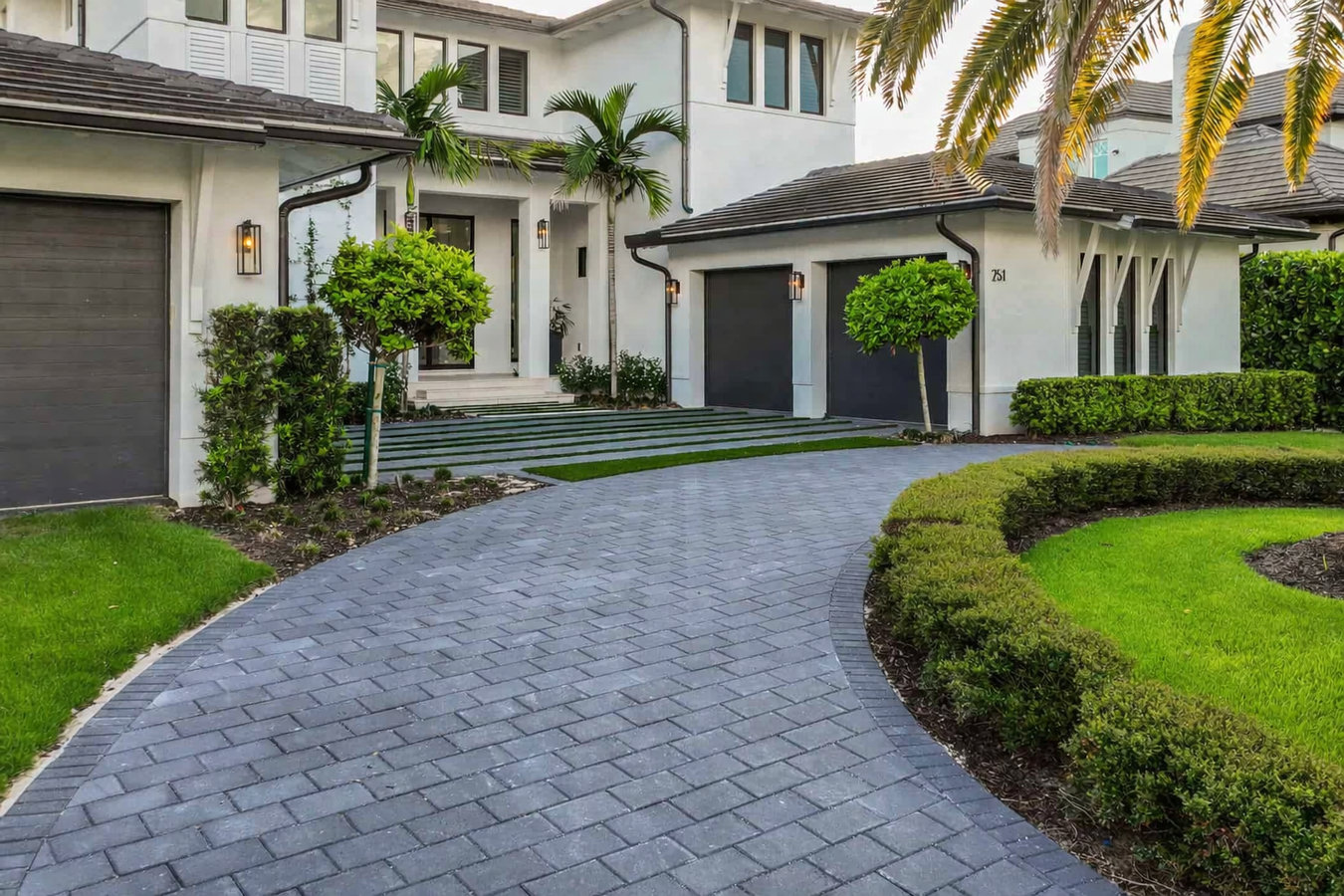
Your cracked or failing driveway does not have to keep getting worse. We install paver driveways with bases built for Central Texas clay soil, proper drainage, and surfaces you can drive on in days.
Driveway pavers in Temple, TX are individual concrete, brick, or stone units set on a compacted base and sand bed - a surface that moves with the ground rather than cracking across a single slab. Most residential installations take two to five days from start to finish, and you can drive on the surface within 24 hours of the crew finishing.
Temple sits on heavy shrink-swell clay soil that expands when wet and contracts when dry. That constant ground movement is the reason concrete driveways in this area develop cracks and uneven sections faster than homeowners expect. Pavers absorb that movement at the joints between individual pieces rather than across a rigid slab, which means they are genuinely better suited to Bell County conditions than poured concrete. If your current driveway has cracked or shifted, the same ground that broke it will keep breaking patched concrete - a paver surface changes that pattern. You may also want to consider retaining wall construction if your yard has any slope that directs water toward the driveway area.
Well-installed concrete pavers can last 25 to 50 years with basic maintenance. The key word is well-installed - the base preparation underneath matters far more than the pavers themselves, and that is where the difference between a driveway that holds up and one that sinks within a few years is determined.
If you see cracks wider than a quarter-inch, chunks breaking away at the edges, or sections that have sunk below the surrounding surface, your driveway is past the point where patching will hold. In Central Texas heat, patch jobs on cracked concrete rarely last more than a season or two before opening back up.
Standing water after a rainstorm that takes more than an hour to drain away means your driveway surface is not shedding water correctly. In Temple, where clay soil already resists drainage, a poorly draining driveway can push water toward your foundation - which is a far more expensive problem than a new driveway.
If you feel bumps or dips when driving over your driveway, or if sections have risen or sunk relative to each other, the ground underneath is moving. This is extremely common in Temple's clay soil, which expands and contracts with every wet and dry cycle. An uneven surface is also a tripping hazard near the garage or front walkway.
Weeds growing through your driveway mean the surface has gaps large enough for roots to take hold, which also means water is getting in. In Temple's warm climate, weeds grow aggressively from spring through fall and can widen cracks quickly. If you are pulling weeds from your driveway regularly, a replacement is more cost-effective than ongoing maintenance.
Every driveway paver project starts the same way: excavating the existing surface, preparing a deep compacted gravel base, screeding a sand bed, and setting pavers one by one in your chosen pattern. The variation is in what comes before - whether we are removing an existing cracked concrete slab, starting fresh on bare ground, or lifting and resetting a section of an existing paver driveway that has sunk or shifted. We handle all three scenarios and pull the required City of Temple permit on every job.
Drainage is designed into every project. We assess the slope of your driveway and the path water takes after a rain, then set the pavers at the angle that moves water away from your garage and foundation. Once your driveway is in, we also install walkway construction that connects your driveway to your front entry, patio, or side yard - all using the same materials and base standards so every surface in your landscape holds up equally well.
Best for homeowners replacing an existing concrete or asphalt driveway that has cracked, shifted, or failed beyond repair.
For properties being built or expanded, including homes adding a second driveway apron or wider entry.
For existing paver driveways where a section has sunk or shifted - the affected area is lifted, the base is re-leveled, and the original pavers are reset.
Bell County sits on some of the most reactive clay soil in Texas - the kind that swells in wet weather and contracts during a dry stretch. Poured concrete driveways handle this poorly because they are one rigid slab, and soil movement has nowhere to go except into a crack. Pavers handle it differently: each piece can shift slightly at the joint without breaking, which is why paver surfaces in this region outlast concrete by decades when the base is done right. Temple also regularly sees summer temperatures above 95 degrees, and that heat dries out the sand between paver joints faster than in cooler climates. Plan to inspect your joints every spring and re-sand when needed - every two to three years is realistic here. Texas A&M AgriLife Extension publishes guidance on managing expansive clay soils that is worth reading if you are dealing with recurring surface problems.
Many newer Temple neighborhoods - particularly in the southwest growth corridors around Nolanville and Belton - are governed by homeowners associations that require written approval before driveway work begins. We ask about HOA requirements upfront on every job and can help you put together the approval request if one is needed. Permits are also required by the City of Temple for all driveway construction - we pull them as a standard part of every project, not an afterthought.
When you reach out, we ask about your driveway size, your current surface, and whether you have drainage concerns or HOA requirements. We respond within 1 business day and schedule a free on-site estimate visit that typically takes 20 to 40 minutes.
Once you approve a scope and price, we pull the required City of Temple permit before any work begins. We confirm your paver selection - color, pattern, and material - and order materials if not already in stock. Permit processing typically adds one to two weeks before work starts.
On the first day, the crew removes your existing driveway surface and excavates several inches of soil to make room for the base layers. The exposed ground is compacted and a gravel base layer is installed and compacted in stages - this is the most important phase of the entire project.
After the sand bed is screeded flat, pavers are set one by one in your chosen pattern. Edge restraints lock the perimeter, a plate compactor locks everything together, and joint sand is swept into the gaps. You can typically drive on the finished surface within 24 hours.
Free on-site estimate - we come to you, assess the ground, and give you a written quote. No obligation.
(254) 791-8302Bell County's shrink-swell clay is one of the leading reasons driveways fail early in this area. We excavate to the depth the soil requires, compact the gravel base in multiple passes, and screed the sand layer flat before a single paver goes down. That base is what your driveway rides on for the next 25 to 50 years.
Texas A&M AgriLife ExtensionThe City of Temple requires a permit for driveway construction, and we handle that process as part of every job. Unpermitted work can create problems when you sell your home and may void any workmanship guarantee. We never suggest skipping it.
We assess the slope and drainage path of your driveway during the estimate visit, not as an afterthought. Pavers installed with the right slope and drainage move water away from your garage and foundation - which matters in a city where clay soil does not absorb water quickly after a heavy rain.
You receive a written estimate before we start, and the number does not change unless you request something different. Vague verbal quotes that grow after work begins are one of the most common complaints about driveway contractors - we operate differently.
Every paver driveway we install is backed by a written scope of work and the City of Temple permit on file. That paper trail protects you during the job and years later when you sell your home.
Hold back soil on a sloped lot and create flat, usable yard space alongside your new driveway.
Learn MoreConnect your paver driveway to your front door or side yard with a matching walkway built on the same base standards.
Learn MoreSpring and fall booking slots fill up fast - reach out now to lock in your project date before the next season's rush.