
Loading...
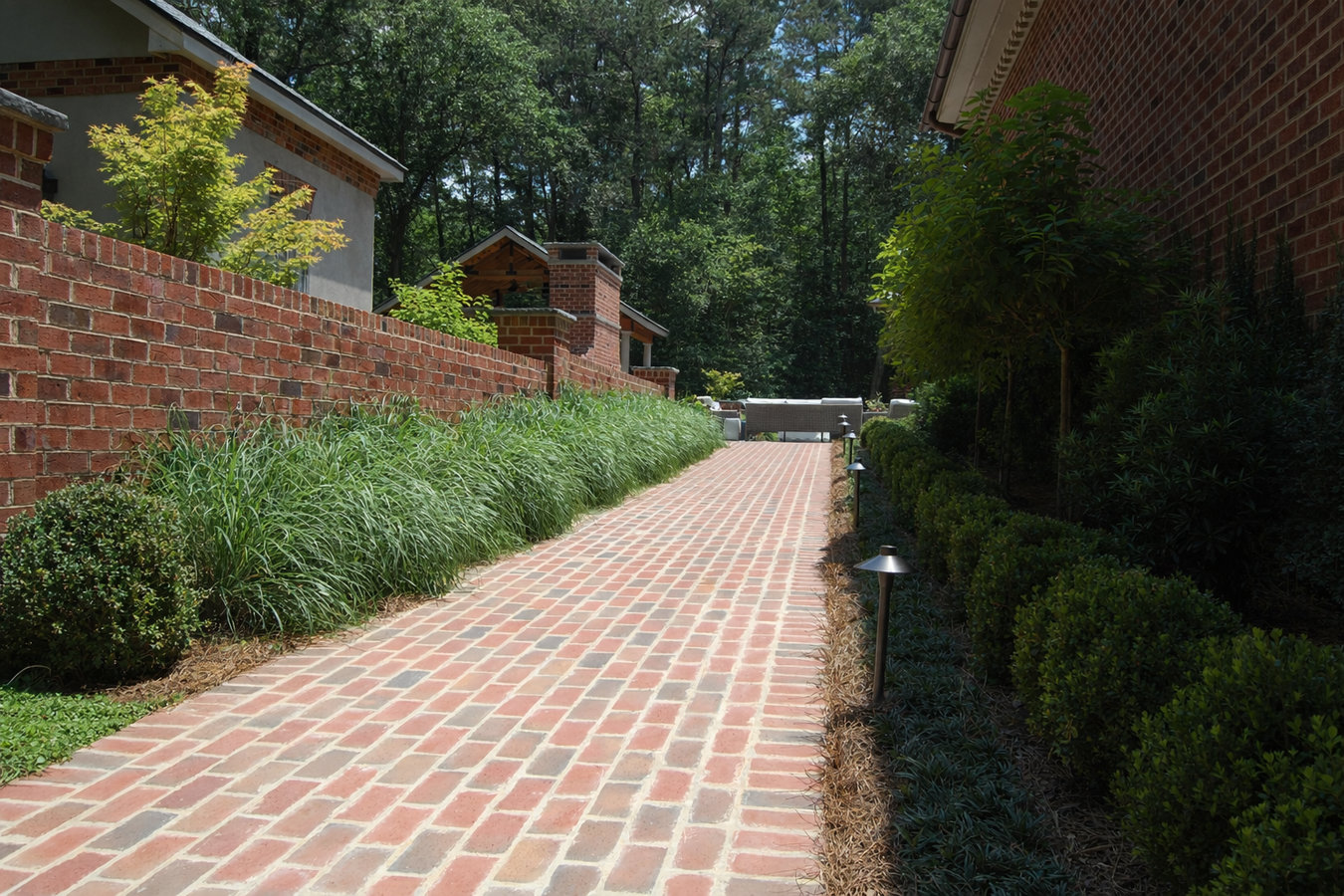
Temple's clay soil moves every season. A walkway that cracks or sinks was built on the wrong base. We prepare the ground for local conditions, build in proper drainage, and handle any permits.
Walkway construction in Temple, TX involves marking out the path, excavating the soil to the correct depth, packing in a firm gravel base, and installing the surface material - concrete, brick, or stone. Most projects take one to three days on site, depending on the path length and material chosen.
The detail that separates a walkway that lasts from one that cracks within a couple of years is what happens below the surface. Bell County sits on expansive clay soil that swells when wet and shrinks during dry spells. Without a deep, properly compacted base and control joints built in, that movement will crack any surface - concrete, brick, or stone. If the existing path drains toward your home rather than away from it, that is a separate problem worth addressing at the same time. Homeowners adding outdoor paving near the front of the house often pair walkway work with driveway pavers or brick wall installation for a complete curb appeal upgrade.
Temple also requires permits for certain walkway projects, particularly when the path connects to a public sidewalk or involves grading. A reputable contractor handles that paperwork before any digging starts - you should not have to deal with the city office yourself.
If you see cracks wider than a hairline spreading across your existing walkway, the base has shifted - likely due to Temple's clay soil expanding and contracting through wet and dry seasons. Small surface cracks can sometimes be patched, but cracks that run all the way through the slab usually mean the walkway needs to be rebuilt from the base up.
When one section of a walkway sits noticeably lower than the next, or when a slab has tilted so water pools on it, the ground underneath has moved. In Central Texas, this is almost always caused by soil shrinkage during a dry summer or swelling after heavy rain. A sunken section is also a tripping hazard worth fixing before someone gets hurt.
After a rainstorm, watch where the water goes. If it collects near your entryway or runs toward your house instead of away from it, your current walkway may be sloped incorrectly or blocking natural drainage. This is especially important in Temple, where heavy downpours can deliver a lot of water in a short time.
If you have large trees near your front path and the walkway is lifting or cracking in an uneven pattern, root growth is likely the cause. This is common in older Temple neighborhoods where oaks and pecans have had decades to spread. Once roots have buckled a walkway, patching rarely holds - a new installation designed around the root zone is usually the better long-term fix.
We build new walkways and replace failing ones using concrete, brick pavers, and natural stone. Every installation starts with the same foundation work: excavation to the right depth, compacted gravel base, and a surface slope that drains water away from your home. For brick wall installation projects that run alongside a new path, we coordinate both scopes so the base preparation and drainage work together. For homeowners who want to extend paving to the street, we connect walkway work with driveway pavers for a continuous, matched surface.
We also handle repair and replacement of existing walkways that have cracked or shifted from soil movement. That means assessing the base, not just patching the top. A surface patch over a failed base lasts a season or two at best - the right fix addresses what caused the cracking in the first place.
For homeowners who want a durable, low-maintenance path from the driveway or street to the front door - built with the base prep and control joints Temple's clay soil demands.
For homes with a traditional or established look where a warmer surface material fits the character of the neighborhood better than plain concrete.
For homeowners who want a custom, high-end look in their front yard or garden area, installed on a proper compacted base that prevents shifting.
For existing walkways that have cracked, sunken, or shifted due to Bell County clay soil movement - assessed from the base up, not just patched on top.
Temple sits on Blackland Prairie clay - the same soil that runs through most of Bell County and causes more walkway failures than any other single factor in this area. The soil swells when it gets wet and shrinks when it dries, and that cycle happens every year. A walkway built without a deep gravel base and proper control joints will crack and shift with that movement, often within a couple of seasons. Contractors who do not work regularly in Central Texas sometimes underestimate how much that soil preparation matters here. Homeowners in Belton and Nolanville deal with the same soil conditions and see the same failure patterns when the base is not right.
Drainage is the other factor that is easy to overlook. Temple averages around 35 inches of rain per year, and much of it falls in intense bursts. A walkway that slopes even slightly toward the house - or that blocks natural water flow in the yard - can contribute to foundation moisture problems over time. That is not a dramatic risk in any single storm, but it adds up. Building the correct drainage slope in from the start is far easier than correcting it after the surface is poured. Temple's summer heat also affects installation timing: concrete poured during July and August needs to be worked early in the morning before temperatures push above 95 degrees, or it can dry too fast and crack before it ever fully cures.
We come out, look at the path area, check the ground slope and any obstacles like roots or buried lines, and discuss your material options. Most estimates are free. You will hear back from us within 1 business day of your call.
If a City of Temple permit is required for your project, we handle that paperwork before any digging starts. Once permits are in place and a start date is confirmed, you get a clear timeline - including early-morning scheduling during summer months.
The crew digs out the path area to the correct depth and packs in a compacted gravel base. This is the most important step in the whole job - it is what keeps a walkway from cracking and shifting as Temple's clay soil moves through wet and dry seasons.
Concrete is formed and poured in one session with control joints cut in; brick and stone are set by hand. For concrete, plan to stay off the surface for 24 to 48 hours - longer in summer heat. We walk you through the finished walkway before we leave.
Free estimate. Written quote. No obligation. We respond within 1 business day.
(254) 791-8302Temple's clay soil swells when it rains and shrinks when it dries, and that movement is the main reason walkways crack. We dig to the right depth and compact a proper gravel base before anything goes on top - the step most budget contractors skip. It is the difference between a walkway that lasts 25 years and one that needs repairs after the first few seasons.
Every walkway we build is sloped correctly so rainwater drains away from your home, not toward it. In Temple, where heavy downpours are common, a flat or inward-sloping walkway can push water toward your foundation over time. We build the slope in from the first day - it is not something you can add later.
If your project requires a Temple building permit, we pull it, handle the process, and keep you informed. You do not have to call the city or deal with the paperwork. Permitted work protects you at resale and means the job was inspected and meets local standards. City of Temple Development Services
Older Temple neighborhoods have mature oaks and pecans whose roots can lift and crack a walkway in just a few years. We look at the root zone before we design the path - routing around it or using an approach that gives the surface flexibility where roots are likely to travel. Ignoring roots during installation almost always means cracking and lifting within a few years.
Every walkway we build in Temple is designed around the specific site - soil, slope, existing trees, and drainage. That local knowledge, backed by proper base preparation and permit handling, is what makes the difference between a path that holds up for decades and one that fails after the first dry summer.
The Interlocking Concrete Pavement Institute provides publicly available installation standards for paver and hardscape work - a useful reference when evaluating any contractor's process.
Add a brick border, garden wall, or privacy screen to complement your new front walkway.
Learn MoreExtend your paving project from the front path all the way to the street with a matched driveway surface.
Learn MoreTemple spring booking goes fast - lock in your date now and avoid the heat rush.